请双击输入内容...

Tel: +86-20-86181657

Email: sales@sunrans.com
Share to:











- Media News -
OEM and ODM Partnership: How SUNRANS Supports Private Label Spa Brands
Time: 2026-09-09 16:40:34
Author: SUNRANS
Click:
See how SUNRANS supports OEM spa and private-label manufacturing through briefs, customization, compliance, sampling, testing, and launch support.
OEM and ODM Partnership: How SUNRANS Supports Private Label Spa Brands
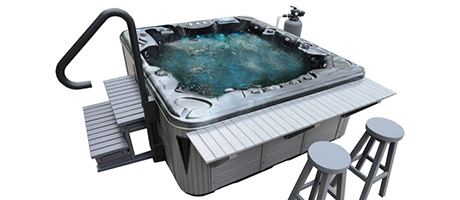
A successful private-label spa program connects customer insight with feasible engineering, controlled customization, market compliance, repeatable manufacturing, and launch support. The right OEM spa partner helps define the brief, select the development route, approve specifications, evaluate samples, manage testing, prepare documentation, and scale only after commercial and quality milestones are clear.
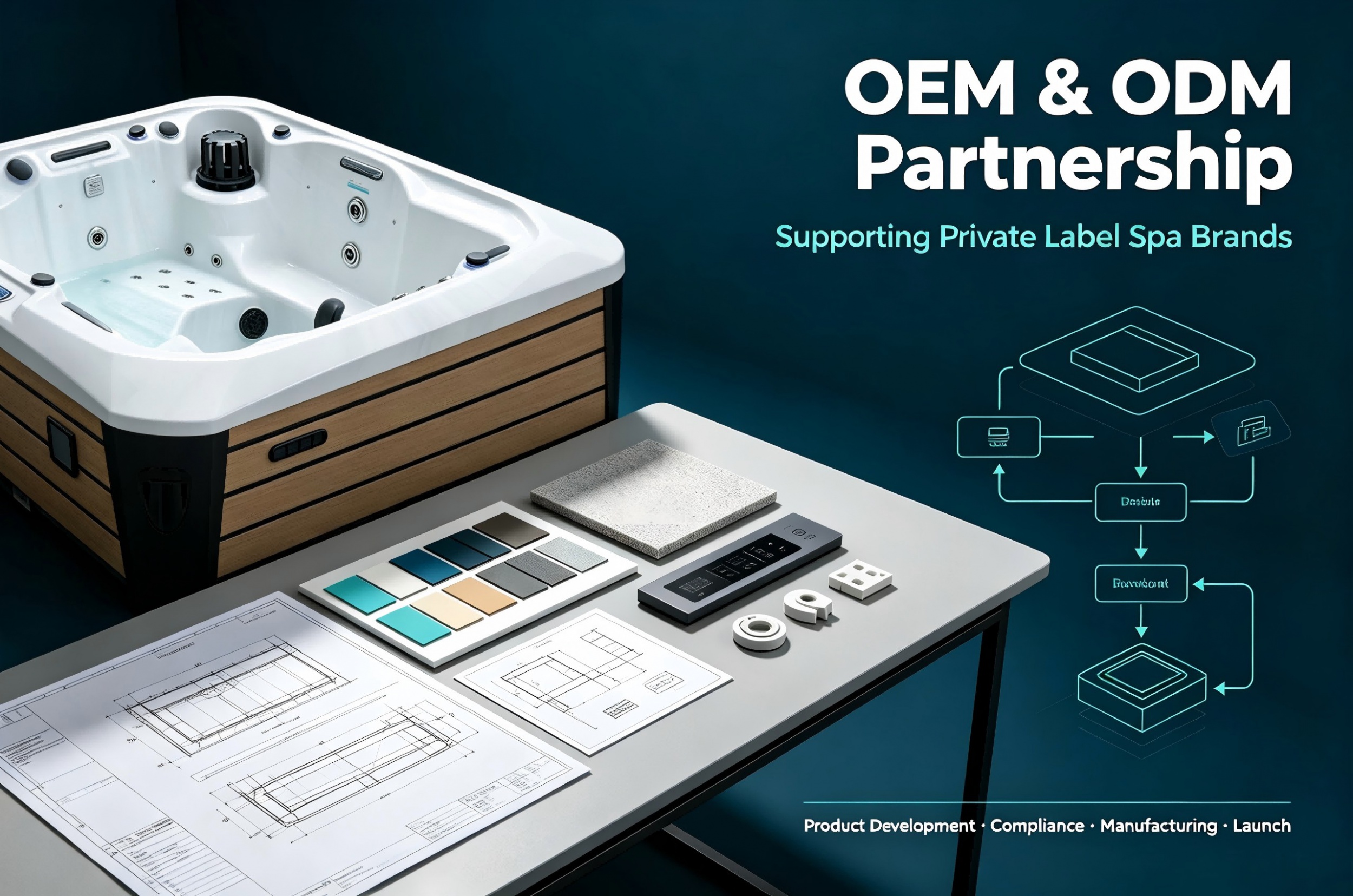
The right OEM spa partner helps a brand connect commercial positioning with engineering and manufacturing reality. SUNRANS supports private label manufacturing through product development, 100+ patents, two principal production bases, international-market experience, and structured spa customization.
Why Private Label Manufacturing Is Attractive
Dealers and wellness companies often begin by reselling established products. As the business grows, a private label can help it move from product distribution toward brand ownership.
A well-designed OEM spa program can provide:
• Product and feature combinations aligned with a defined customer segment.
• A distinctive visual identity across shell, cabinet, control area, packaging, and materials.
• Reduced direct price comparison with nearby competitors.
• Greater control over portfolio structure and launch timing.
• A platform for building long-term brand equity.
Private label manufacturing is not automatically more profitable. Development cost, certification, forecasting, spare parts, warranty administration, minimum volumes, packaging, and marketing all need to be included in the business case. The strongest programs begin with a realistic target price and a clear reason the product should exist.
What to Expect from an OEM Spa Partner
An OEM supplier manufactures to an approved specification, while an ODM partner may contribute more product concept, engineering, design, and development input. In practice, many projects combine both approaches.
Before selecting a partner, evaluate four areas:
1. Development capability. Can the team translate customer needs into a feasible product brief?
2. Manufacturing control. Can the approved specification be repeated across production batches?
3. Compliance discipline. Are model, component, label, and documentation changes controlled for the destination market?
4. After-sales readiness. Will the brand receive parts identification, technical documents, training, and a workable claim process?
SUNRANS' portfolio of more than 100 patents supports development across product appearance, structures, and functions. Its two principal production bases in Huizhou and Heyuan provide annual production capacity of up to 130,000 units across the manufacturing system. The company exports to 80+ countries and supports certification configurations that may include CE, ETL, UL, and SAA, depending on the exact product and market.
From Concept to Production: A Practical OEM Process
Step 1: Define the Market Brief
The brand and manufacturer align on the target country, customer, retail position, channel, installation environment, expected volume, service model, and launch date. This stage should also identify competitor references and the value proposition the new product must deliver.
Step 2: Select the Development Route
The fastest route may be a proven platform with selected changes. A deeper ODM project may involve layout, appearance, functions, molds, electronics, or structural development. The parties should define what is standard, what is optional, and what requires new engineering.
Step 3: Confirm the Technical Specification
The working specification covers dimensions, seating, jets, pumps, controls, heating, filtration, acrylic, frame, insulation, cabinet, lighting, electrical configuration, accessories, packaging, and labeling. Every approved change should have version control so purchasing, production, testing, and marketing use the same information.
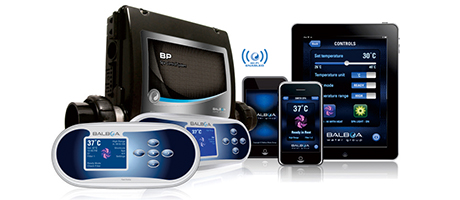
Depending on the model, SUNRANS configurations may use Aristech acrylic, Balboa controls, and 304 stainless-steel frames. The exact component list should be confirmed for the approved OEM spa.
Step 4: Plan Compliance Early
Certification is not a final sticker applied after development. The target market and product functions determine applicable requirements, test samples, documentation, labels, manuals, and change-control obligations. Brands should agree on responsibilities, costs, ownership of reports, and the effect of later component changes.
Step 5: Build and Evaluate the Sample
The sample is reviewed against the approved brief for appearance, ergonomics, function, service access, packaging, and brand execution. Feedback should be consolidated into one controlled revision list. Selected SUNRANS programs may support a one-unit starting quantity for evaluation or market testing, subject to model, customization scope, and commercial confirmation.
Step 6: Approve Production and Quality Criteria
Before mass production, both parties approve the final specification, reference sample, inspection criteria, packaging, documents, and production schedule. SUNRANS applies 100% finished-product inspection and a 48-hour complete-unit testing process before shipment.
Step 7: Prepare the Market Launch
A private-label product needs more than production. Coordinate product photography, technical sheets, manuals, installation guidance, spare-parts lists, training, warranty policy, and launch content before inventory arrives.

Choosing the Right Level of Spa Customization
Customization should be prioritized by customer value and business impact. A useful three-level structure is:
• Configuration customization: shell and cabinet colors, control options, accessories, filtration, insulation, or packaging within an existing platform.
• Brand customization: logo placement, labels, manuals, packaging, product naming, and approved marketing assets.
• Product development: meaningful changes to appearance, structure, layout, functions, or tooling.
Start with the least complex route that creates a defensible market difference. Excessive customization can increase testing, inventory, training, and replacement-part requirements. A phased program allows the brand to validate demand before committing to deeper development.
Flexible Cooperation Models
SUNRANS supports several common B2B approaches: distributor-branded configurations, market-specific model selections, limited-distribution programs, hospitality or project adaptations, and deeper ODM development. Commercial terms depend on the model, scope, tooling, certification, packaging, and forecast.
Rather than presenting a generic success story without context, SUNRANS recommends evaluating each private-label opportunity against measurable milestones: approved brief, sample acceptance, compliance readiness, production consistency, launch preparation, and field feedback.
Learn more about SUNRANS OEM and ODM services (/oem-odm) or review the company's manufacturing capabilities (/about/manufacturing).
Conclusion
A successful private-label spa is built through disciplined decisions, not customization alone. The right OEM/ODM process connects customer insight, engineering, compliance, manufacturing, quality control, and launch support.
Developing an OEM spa or private-label wellness range? Book a dedicated OEM/ODM meeting with SUNRANS at PSP Expo 2026 or Piscine Global 2026 to review your concept, market, and next development step.

点击右上角
分享给朋友吧







 Long by picture save/share
0

English
- 中文
- English
Share to:  |
|
Copyright© GUANGZHOU SUNRANS SANITARY WARE CO.,LTD
粤ICP备17099389号-2
Contact us
Tel: +86-20-86181657 Email: sales@sunrans.com
Share to
Contact us Tel: +86-020-26231998 Email: sales@sunrans.com Post code: 511300
Copyright © GUANGZHOU SUNRANS SANITARY WARE CO.,LTD 粤ICP备17099389号
